
Garage Door Maintenance Tips for Southern California Homes
Southern California's coastal-adjacent climate is uniquely hard on garage doors. Damp marine-layer mornings roll through Norwalk and rust bare metal; hot inland afternoons bake and fatigue the springs. A little maintenance twice a year prevents most of the failures we get called out for.
None of this takes special tools or much time. Set a reminder for spring and fall, block out 30 minutes, and you'll add years to your door's life and catch small problems while they're still cheap. Here's the routine we'd walk our own neighbors through.
Fight the Marine-Layer Rust
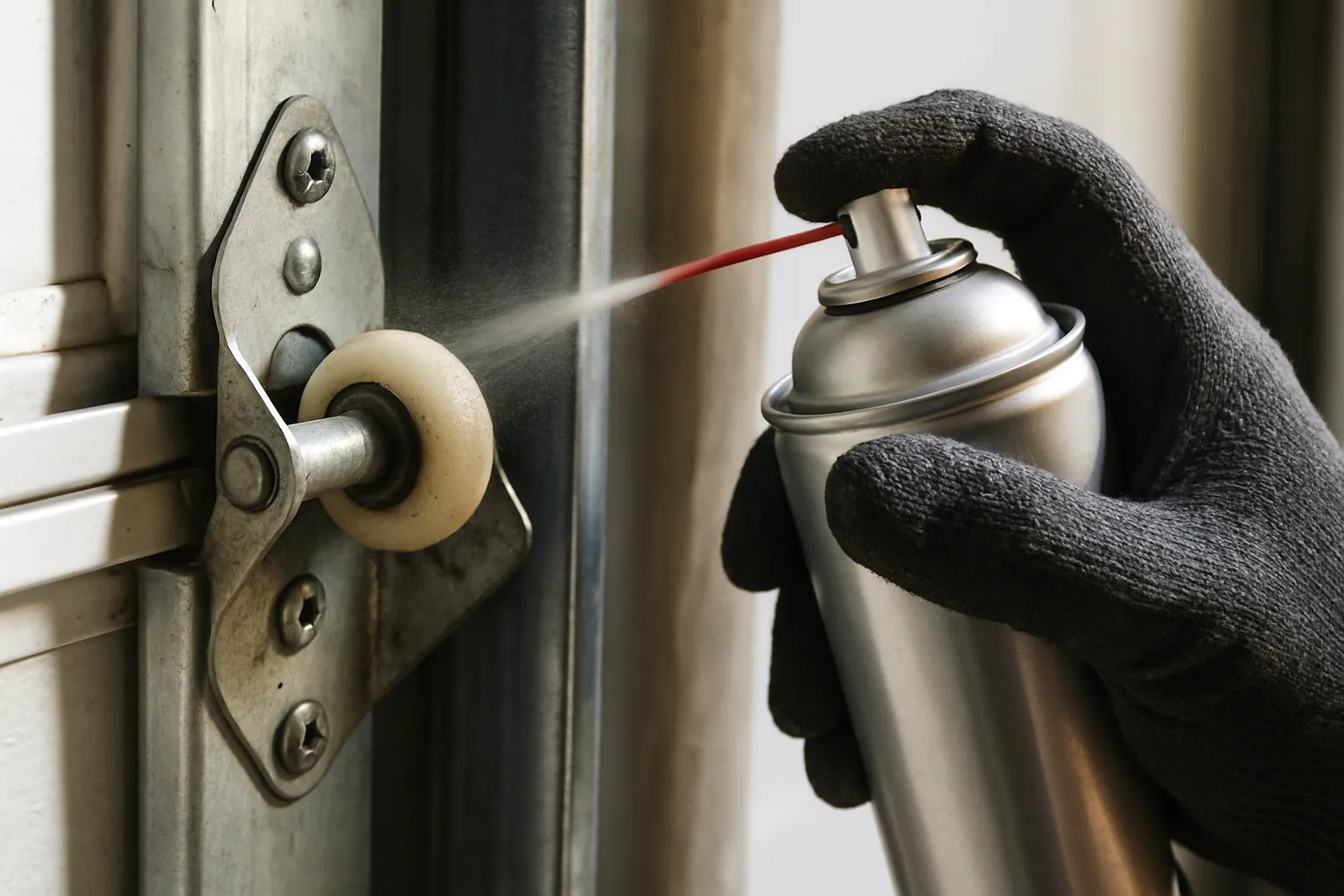
The damp mornings that roll through Norwalk rust cables and spring coils over time. Rust is the quiet killer here, it weakens a cable strand by strand until one day it snaps. Twice a year, wipe down the springs, cables, and rollers with a dry cloth, then apply a light coat of garage-door lubricant. Pay extra attention to north-facing garages that stay damp longer and to any door within a few miles of the coast.
While you're wiping things down, look for the warning signs of rust that's gone too far:
- Frayed or fuzzy-looking cable strands near the bottom bracket or drum
- Orange staining or flaking on the spring coils
- Rollers that leave rust dust on the track
A frayed cable is a call-a-pro item, not a wait-and-see one. If you spot it, get cable repair before it lets go and drops the door.
Lubricate the Right Way (Not WD-40)
This is the single most valuable thing you can do, and the easiest to get wrong. Use a silicone or lithium-based garage-door lubricant. Do not use WD-40 as a lubricant, it's a solvent and degreaser, so it actually strips lubrication and then attracts dust and grit that grind your hardware down.
Where to apply, and where not to:
- Springs: a light mist along the coils to keep moisture out and reduce friction
- Rollers: a little where the stem meets the hinge (skip the roller face and nylon rollers' bearings)
- Hinges: at each pivot point
- Bearings and end plates: a small amount keeps them turning quietly
- Skip the track itself. The track only needs to be clean, not lubricated, oil there just collects grime
Wipe off any excess so it doesn't drip. This one habit, done every six months, prevents a huge share of the noise and wear we get called about.
Test the Door's Balance
A door that's out of balance overworks the opener and wears everything faster. Test it a couple of times a year, and it takes two minutes.
- Close the door fully.
- Pull the emergency release cord to disconnect the opener.
- Lift the door by hand to about waist height and let go.
A properly balanced door stays put. If it slams down or flies up, the springs are no longer counterbalancing the door's weight and need adjustment. Don't try to adjust or replace torsion springs yourself, they hold enough tension to cause serious injury. That's spring repair territory. When you're done, reconnect the opener by running it once until the trolley re-latches.
Inspect Rollers, Hinges, and Tracks
A door that's getting louder is telling you the rollers and hinges are wearing. Grinding, popping, or shuddering are cheap to fix now and expensive to ignore. During your twice-a-year check:
- Rollers: look for chipped, cracked, or wobbling rollers. Worn steel rollers are a good chance to upgrade to quieter nylon ones.
- Hinges: check for cracks and loose or missing screws. Snug them up.
- Tracks: make sure they're plumb and free of dents. A dent or a track knocked loose can throw the door off its rail, common here after someone bumps it or after an earthquake jolts the door.
- Bolts and brackets: the vibration of daily use loosens hardware over time. Tighten anything that's backed out, but leave the red-painted bottom-bracket bolts alone, those are under spring tension.
If a roller has jumped the track or the door binds and sits crooked, stop using it and get off-track and roller repair. Forcing an off-track door bends the rail and turns a small job into a big one.
Keep the Sensors and Opener Happy
The photo-eye safety sensors near the floor get bumped and dusty. A quick wipe and a check that they're aligned prevents the most common "my door won't close" call. Both indicator lights should glow steady; a blinking light means one is out of line, loosen the wing nut and nudge it until both are solid.
While you're at it, give the opener a little attention. Test the auto-reverse safety feature by laying a roll of paper towels flat under the door and closing it, the door should touch the roll and reverse. If it doesn't, stop using the opener and get it looked at. And if the opener is straining, grinding, or intermittent, our opener repair page covers your options; repairs run $150 to $400, a new opener installed $350 to $650.
Check the Weatherseal
The rubber weatherseal along the bottom of the door and the vinyl stripping down the sides keep out water, dust, drafts, and the occasional rodent. In our climate they dry out, crack, and shrink from sun exposure.
- Look for cracks, gaps, or a bottom seal that no longer touches the floor evenly.
- Press along the side seals to check they still seat against the door.
- Replace anything brittle, it's inexpensive and keeps the garage drier, which slows the rust cycle inside.
This matters even more if your garage is heated, cooled, or converted to living space, a good seal is the difference between a comfortable room and a drafty one on Norwalk's cooler mornings.
Your Twice-a-Year Checklist
Print this or set a spring-and-fall reminder. Fifteen to thirty minutes, twice a year.
- Wipe down springs, cables, and rollers; look for rust and fraying
- Lubricate springs, rollers, hinges, and bearings with silicone or lithium (never WD-40)
- Run the balance test with the opener disconnected
- Inspect rollers, hinges, and tracks; tighten loose hardware
- Clean and align the photo-eye sensors
- Test the opener's auto-reverse with a roll of paper towels
- Check the bottom and side weatherseal for cracks and gaps
Anything on this list that involves the springs, cables, or an off-track door, hand off to a technician. The rest is safe to do yourself.
Get Garage Door Help in Norwalk
Rather have someone handle the tune-up, or did your check turn up a frayed cable, a tired spring, or a noisy opener? We'll take care of it. Call (562) 667-4784 for same-day service across Norwalk and southeast LA County, or request service online.
Questions, Answered
How often should I lubricate my garage door?
Every six months in our climate, more often for a north-facing or heavily used door. The damp marine-layer mornings in Norwalk make regular lubrication more important here than in drier inland areas.
What lubricant should I use?
A silicone or lithium-based garage-door lubricant. Avoid WD-40 as a lubricant; it's a solvent that strips existing lubrication and attracts dust, which grinds your hardware down over time.
How do I test if my garage door is balanced?
Close the door, pull the emergency release to disconnect the opener, then lift the door by hand to about waist height and let go. A balanced door stays put. If it drops or rises on its own, the springs need adjustment, call a pro, don't adjust springs yourself.
Why is my garage door so noisy?
Usually dry or worn rollers and hinges, or loose hardware. Lubricate the moving parts with silicone or lithium spray and tighten any loose bolts (leave the red bottom-bracket bolts alone). If grinding or popping continues, a roller or bearing may be worn out.
Can maintenance really prevent a broken spring?
It can't stop normal cycle wear, springs are rated around 10,000 cycles, 7 to 12 years, but keeping them clean and lightly lubricated slows the rust that makes them fail early in our climate. The balance test also flags a tired spring before it snaps.
Need Help in Norwalk?
Garage Door Pro Norwalk provides fast, same-day garage door repair across Norwalk, CA and the surrounding area — flat-rate pricing, licensed and insured, with 24/7 emergency service. Landed on this article from a search? Head back to our homepage to see everything we do, or reach out now.